


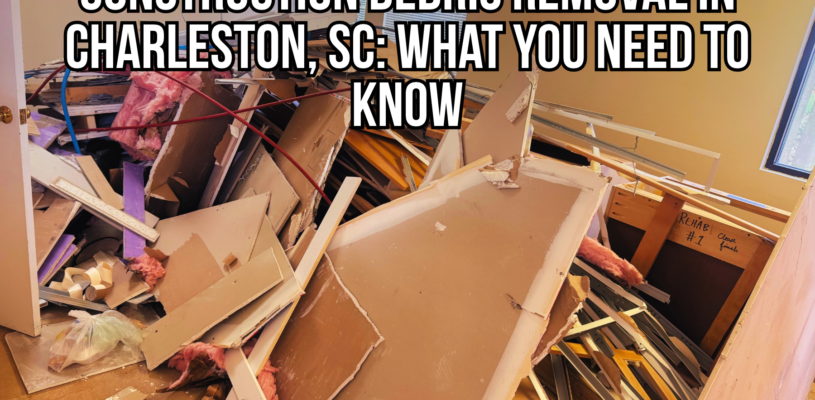

Construction debris removal is the hauling and disposal of leftover materials from building, remodeling, repair or demolition work. For a Charleston homeowner finishing a kitchen, bath or flooring project, that usually means drywall scraps, lumber, old cabinets and flooring. Some of those materials are routine to haul, and others need to be confirmed before anyone schedules a truck. This guide explains the difference and how to plan the pickup.
At a Glance
- Construction and demolition (C&D) debris is non-hazardous waste from construction, remodeling, repair or demolition.
- Common renovation leftovers like drywall, lumber, trim and cabinets are the typical starting point for a pickup request.
- Concrete, masonry, roofing, paint, solvents and anything that may be contaminated or hazardous need to be discussed before scheduling.
- Charleston County’s convenience centers are for residents, and a hauler should not assume it can use them.
- A short description of materials, volume and access is usually enough to start a conversation.
What Counts as Construction Debris?
Construction debris is waste created by building or altering a structure. The South Carolina Department of Environmental Services (SCDES) describes C&D debris as non-hazardous solid waste generated during the construction, remodeling, repair or demolition of homes, buildings, roads and bridges. For a home project, that is the pile left once the work is done.
It differs from ordinary junk in a few ways. A sofa or a box of old clothes is household junk, while a stack of torn-out cabinets and offcut lumber is renovation waste. The two often end up in the same cleanout, but the material mix can change what a hauler can take and where it can go.
Which Leftover Materials Are Typical?
These are common examples from kitchen, bathroom, flooring and general home improvement projects:
- Drywall and plaster offcuts
- Lumber, framing scraps and trim
- Old cabinetry and countertops
- Flooring such as carpet, laminate and vinyl
- Tile
- Interior doors and removed fixtures
- Packaging and other leftover project materials
Black Dog Junk Removal’s junk removal services in Greater Charleston include construction-related debris removal. The company asks that each specific material and project be confirmed in advance, because acceptance depends on what the material is and how it has to be handled.
Which Materials Need to Be Asked About First?
Some leftovers should be raised before any pickup is scheduled. Ask first about:
- Concrete, brick and other masonry. These are heavy and are often handled differently from ordinary renovation waste.
- Roofing materials. Shingles and similar items may need separate arrangements.
- Paint, stains, solvents and adhesives. Liquids and chemical products are not ordinary debris.
- Anything potentially hazardous or contaminated. Older materials of uncertain composition, or anything affected by a spill or damage, should be assessed before it is moved.
Black Dog does not perform demolition, licensed abatement or hazardous-waste handling. If you suspect a material is hazardous, resolve that with the appropriate professional before arranging a junk pickup. Mentioning a material in a request is not the same as confirmation that it will be taken.
Can I Take Renovation Debris to a Charleston County Convenience Center?
Residents sometimes can, but the rules are specific to residents and do not apply to hauling companies. Charleston County’s residential recycling and convenience center page lists construction and demolition debris among items that the staffed centers accept from residents only, with an exception for the Signal Point location. The County’s recycling guidance also states that convenience centers do not accept commercial yard waste, trash, construction and demolition debris, and hazardous waste materials.
This means residential drop-off access does not carry over to a hauler’s truck. Check the County’s current requirements, including proof of residency and any site rules, before you plan a self-haul trip, since they can change.
For the broader state picture, SCDES publishes guidance for residents on construction and demolition debris. It encourages reuse, repurposing and recycling during remodeling, which is worth considering before you throw usable materials out.
When Does It Make Sense to Hire a Professional?
Hiring help is usually worth considering when:
- The pile is bulky or heavy, such as cabinets, doors or stacks of lumber.
- There is more material than a vehicle can safely carry in one trip.
- The debris is stuck inside the house, upstairs or in a tight garage.
- You are a landlord turning over a unit and do not want to spend a weekend loading.
- You do not want to sort, load and drive materials to a disposal site yourself.
A hypothetical example: a homeowner replaces a bathroom vanity, removes old flooring and ends up with drywall scraps in the garage. Hauling it all alone could take several trips and a lot of lifting. A single request describing the mix and where it sits lets a crew assess it and confirm what can be taken.
For homes, Black Dog’s residential junk removal service handles the lifting, loading and hauling. The company’s website lists same- and next-day service, but availability depends on scheduling and is not guaranteed for every construction debris job.
How to Prepare for a Construction Debris Pickup
A little preparation makes the request clearer and the pickup smoother.
- List what you have. Note the main materials, such as drywall, lumber, cabinets and flooring, and flag anything on the “ask first” list.
- Estimate the volume. A rough description is enough, for example “a garage corner” or “a pickup bed or two.”
- Gather it in one place. Moving debris to a garage, driveway or curb-adjacent area helps, as long as it is safe and you are allowed to stage it there.
- Check access. Mention stairs, narrow doorways, gates, parking limits or HOA rules that might affect the crew.
- Separate the questionable items. Keep paint cans, chemicals and unidentified materials apart from the ordinary debris.
- Keep nails and sharp edges in mind. Stack lumber with exposed nails and broken tile or glass so they are not hazardous to handle.
What Does the Process Look Like?
The sequence is simple. You describe the materials, approximate volume, access and location. The company confirms whether the job is a fit and what the plan will be, then schedules the pickup if it is. Any estimate comes after that confirmation and is based on the actual project, so this article does not quote prices.
Disposal and recycling outcomes depend on the materials and the facilities available. No company can honestly promise that every item will be recycled or accepted at a given site, so treat any blanket claim with caution.
Common Questions
Is construction debris the same as junk?
Not exactly. Construction debris comes from building or repair work, while junk is a broader category of unwanted household items. A single pickup can include both.
Do I have to separate materials?
Keeping hazardous or questionable items apart is the most useful step. Mixed ordinary renovation debris can usually be described together, but ask when you contact the company.
Does the contractor handle debris on my project?
That depends on your agreement. If you are unsure, check your contract before you assume it is covered or arrange your own pickup.
Request a Construction Debris Pickup in Greater Charleston
If you have renovation leftovers to clear, contact Black Dog Junk Removal and describe the materials, approximate volume, how accessible they are and where the job is located. The team can confirm whether the project is a fit before providing a plan or estimate.